This post was written by Dr. Vi Truong (University of Melbourne)
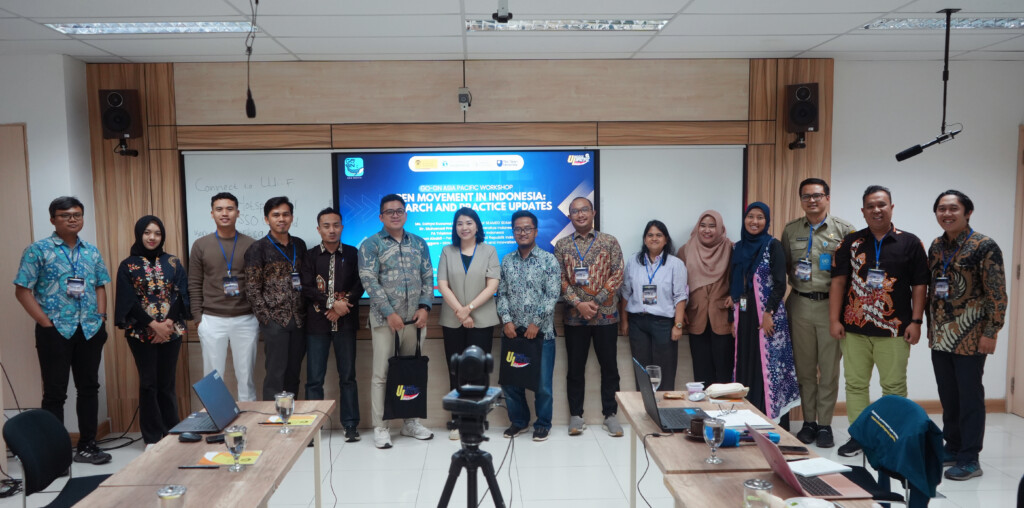
Under the theme Open Movement in Indonesia: Research and Practice Updates, the workshop brought together participants who work on, and are actively interested in, Open Educational Resources (OER), open and digital education, open research data, and broader open science initiatives. The emphasis was on practical realities: how open initiatives are currently being framed and enacted in different settings, what is enabling progress, and what continues to slow implementation. The programme included keynote-style inputs from invited speakers, short participant contributions sharing lived experience of open practice, and a focused discussion and feedback session. These conversations surfaced operational questions around policy settings, long-term resourcing, stakeholder engagement, and workable approaches to collaboration.
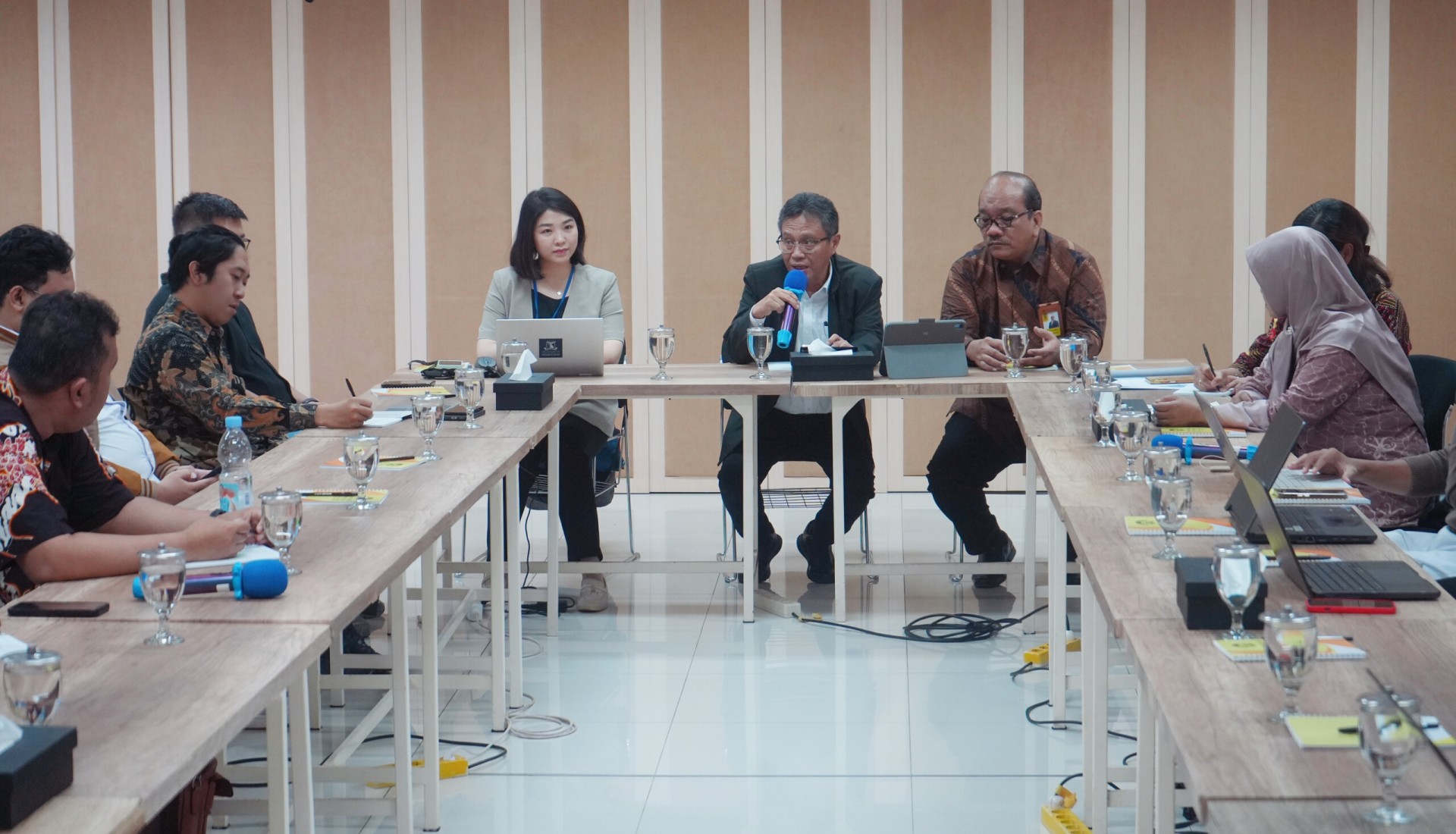
In total, 26 participants attended, spanning senior university leadership, lecturers and researchers, and library staff from three universities. The workshop also welcomed representatives from institutions that play important roles in Indonesia’s open ecosystem, including the National Library, the Jakarta Library, the National Research and Innovation Agency (BRIN), and SEAMEO SEAMOLEC. BRIN coordinates key elements of Indonesia’s research and innovation system and has supported work related to open science and research governance. SEAMEO (the Southeast Asian Ministers of Education Organisation) is an intergovernmental body that supports regional cooperation in education, science, and culture across Southeast Asia. Within SEAMEO’s network of regional centres, the SEAMEO Regional Open Learning Centre (SEAMOLEC) focuses on open and distance learning and works with member countries through training, research and development, consultancy, and knowledge sharing to strengthen education quality and access. Across the day, participants exchanged updates, identified shared challenges, and explored possible next steps for advancing the Open Movement within Indonesia’s education and research landscape.
The workshop opened with welcome remarks from Prof. Supriatna, Director of the Graduate School of Sustainable Development, Universitas Indonesia. He emphasised the value of cross-sector dialogue in strengthening education and research practice, and highlighted the importance of connecting policy perspectives with institutional leadership, libraries, academics and researchers to support more sustainable open initiatives.
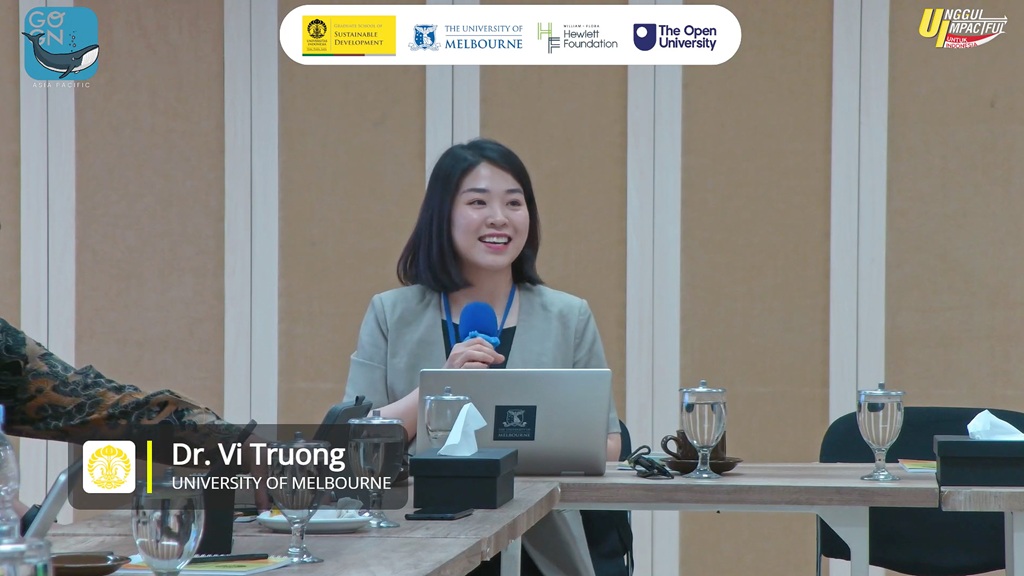
This was followed by an introduction to the Global Open Graduate Network (GO-GN) and the Asia-Pacific Hub by Dr Vi Truong, Hub Lead. Dr Truong provided a brief overview of GO-GN’s purpose as a global network and explained how the Asia-Pacific Hub is bringing together people working on openness across research, institutional practice, and policy. She also noted GO-GN’s focus on strengthening researcher capacity, particularly for postgraduate and doctoral members, by creating opportunities for peer connection, mentoring, and sharing work in progress.
In How Far Indonesia Has Adopted Open Educational Resources: Policy and Implementation, Mr Ababil examined Indonesia’s progress on OER through a policy and service lens, using the National Library of Indonesia (Perpusnas) as a practical case of public infrastructure enabling openness. He began by situating Perpusnas as a government institution responsible for national library services under Indonesia’s library law, and outlined its broad functions, including national guidance, reference and research support, deposit and preservation, and strengthening library networks. He then connected these functions to open learning and access by showcasing Perpusnas’ digital services that support open discovery and use of learning materials. These included Indonesia OneSearch, described as a single search gateway for public collections from libraries, museums, and archives across Indonesia; iPusnas, which allows the public to borrow and read digital books free of charge; BintangPusnas Edu, which supports improved access to digital content for schools and higher education; and Khastara, a digital repository that provides access to Indonesia’s intellectual and cultural heritage. He also highlighted Perpusnas’ e-Resources service, which provides access to journals and digital books, and Pandawa, which offers free and open online learning content that can be accessed anytime and anywhere.
A key point from the presentation was that Indonesia’s OER progress is not only driven by individual universities but is also being strengthened through national-level platforms and services that extend access well beyond a single institution. Mr Ababil’s examples illustrated how libraries can act as infrastructure providers for openness, linking policy intent with practical services that support education, research, preservation, and public learning.
Mr Triatmoko’s presentation, Open and Digital Education to Empower Learner, outlined how Universitas Indonesia is using digital education to expand access and support inclusion, responding to the scale of higher education demand and limited capacity for expansion. He positioned UI as the nation’s teacher by extending digital learning opportunities beyond enrolled students to the wider public, guided by a commitment to human-centric, high-quality, and inclusive education for lifelong learning. He introduced UI’s digital education model, spanning open content, credit-earning online courses, non-degree learning pathways, and stackable micro-credentials. Examples included UI’s digital learning environment, MOOCs, and the CIL marketplace, pre-university and micro-credential programmes, AI literacy modules for students, academics, and professional staff, and open educational video resources. The presentation also highlighted implementation challenges across regulation, learning, and infrastructure, including alignment around distance education and recognition of prior learning, staff support and shared understanding of micro-credentials, learner engagement and assessment, and the need for scalable platforms and reliable support services.
With SEAMEO SEAMOLEC Programs for Open Learning in Southeast Asia, Mr Dona connected Indonesia’s open learning efforts to regional cooperation, outlining SEAMOLEC’s role in supporting open learning across Southeast Asia. He introduced SEAMEO as an intergovernmental organisation that supports collaboration among Southeast Asian countries in education, science, and culture, and explained SEAMEO SEAMOLEC’s role as one of SEAMEO’s regional centres focused on open and distance learning. Based in Indonesia, SEAMOLEC plays a strategic role in supporting regional efforts to expand access to education through flexible and technology-enabled learning approaches. The presentation outlined SEAMOLEC’s key areas of work, including capacity building for educators and institutions, regional research and development, consultancy services, and knowledge dissemination. Mr Dona highlighted SEAMOLEC’s current focus on digital and open learning, emerging technologies, inclusive access, and lifelong learning, with programmes designed to respond to both national and regional education needs. He also emphasised the importance of partnerships and regional networking in advancing open learning. Rather than promoting uniform solutions, SEAMOLEC adopts collaborative approaches that enable countries and institutions to share experiences, adapt practices to local contexts, and build sustainable open and distance learning systems across diverse policy, infrastructure, and cultural environments in Southeast Asia.
Drawing on The Proposed Development of Sustainable Open Research Data Services and Repositories in Indonesia: Lessons Inspired by Developments in the U.S., Dr Wibowo argued for building coordinated research data services, rather than relying on standalone repositories. He began by clarifying what constitutes research data in university contexts and noted how shifts towards open science, data-intensive research, and collaboration are increasing the need for structured research data services that combine infrastructure with guidance and support. Drawing on examples from the United States, he illustrated how more mature research data services integrate repositories with policy support, data management planning, curation, discovery, and licensing practices. These examples showed that while policy mandates and external drivers can accelerate adoption, long-term sustainability depends on institutional commitment beyond short-term projects or funding cycles.
Turning to the Indonesian context, Dr Wibowo observed that most universities have established institutional repositories, but these typically focus on publications such as theses and dissertations. Dedicated research data repositories and coordinated data services remain limited. He highlighted common barriers faced by researchers, including concerns about confidentiality and privacy, unclear licensing and ownership, limited incentives for data sharing, and gaps in data management capability. A central message of the presentation was that sustainable open research data services require shared responsibility and coordination across libraries, IT units, research offices, university leadership, government, and researchers. Rather than framing open data as a purely technical issue, he emphasised the need for a gradual cultural and organisational shift supported by policy alignment, capability building, and sustained collaboration.
Mr Trianggoro’s presentation, Open Movement: Current State and Recommendation, offered a policy-focused overview of how openness is currently framed and pursued in Indonesia. He described the Open Movement as an effort to ensure that knowledge can be accessed, shared, and reused collaboratively, without unnecessary legal or technical barriers. From this perspective, he mapped the scope of openness across several interconnected areas, including Open Science, Open Educational Resources (OER), Open Data, Open Access, Open Culture, and Free and Open Source Software. He highlighted a number of ongoing challenges that affect implementation. These included limited regulatory frameworks for open data in the public sector, fragmented policy advocacy across institutions, and gaps in understanding between policymakers and practitioners. He also noted difficulties in sustaining open initiatives over time, particularly where coordination and long-term resourcing are weak.
The presentation also positioned Indonesia’s open efforts within the context of national reporting on the UNESCO 2021 Recommendation on Open Science. Mr Trianggoro outlined key areas considered in this process, such as awareness raising, policy development, investment in infrastructure and services, capacity building, incentives and research evaluation, sharing of best practices, and international cooperation. He concluded by emphasising the need to strengthen open licensing practices, improve infrastructure to support access to public domain and openly licensed works, and develop more coherent coordination mechanisms to support sustainable open initiatives.
The workshop continued with a series of lightning talks from participants, who shared brief accounts of their experiences with open research and open practices in their own institutional contexts. These short contributions highlighted differences in scope, maturity, and support across institutions, and helped surface practical issues that may not emerge in formal presentations alone.
Building on these lightning talks, the discussion turned to the idea of integrative platforms for sharing research data and local knowledge. Participants broadly agreed that technical development is not the primary challenge. Instead, alignment of institutional interests, policy backing, sustainable funding, and stakeholder trust were identified as the most significant barriers. Participants also noted the need for coordinated awareness raising and capacity building across different stakeholder groups, including policymakers, university leaders, researchers, and library and professional staff, so that open initiatives are supported by shared understanding and practical capability. A recurring suggestion was to adopt phased approaches to collaboration, starting with small-scale partnerships between a limited number of institutions. This would allow shared learning, testing of governance arrangements, and gradual expansion, rather than attempting comprehensive national solutions from the outset.
Several shared understandings emerged from the workshop:
The Jakarta workshop reinforced the value of regionally grounded, relationship-focused engagement that recognises local policy environments and institutional realities. For the GO-GN Asia-Pacific Hub, the workshop contributed to ongoing community building by strengthening cross-institutional connections and creating space for shared learning and exchange on open education and related open practices. With further activities in Indonesia, the Hub aims to support the country’s open movement by encouraging more research, strengthening research–practice connections, and creating more opportunities for researchers, particularly emerging and doctoral researchers, to share, connect, and develop their work. Future Hub activities will continue to build on these relationships, supporting practical dialogue and collaboration that helps translate openness from principle into sustainable, context-sensitive practice.
We are grateful to Dr Irene Sondang Fitrinitia and her team at the Graduate School of Sustainable Development, Universitas Indonesia, for their generous support and careful organisation of the workshop. We also thank all speakers and participants for contributing their time, insights, and energy, especially given the year-end timing and the heavy rain on the day. Their engagement made the workshop both productive and collegial.
Photo credits: Vi Truong and Universitas Indonesia. Used with Permission.
Tác giả: Dr. Vi Truong (University of Melbourne)
Ý kiến bạn đọc
Những tin mới hơn
Những tin cũ hơn